Boxing for fitness can be entirely non-contact. You can build coordination, conditioning and whole-body strength through footwork, shadowboxing and controlled bag drills. You do not need to spar or get hit.
The best way to begin is to learn each skill in order. Set your stance first. Move without losing balance. Add slow punches and bring each hand back to guard. Increase the workload only when those actions stay clean. whole-body strength
How does non-contact boxing improve fitness without sparring?
Fitness boxing uses boxing movements as exercise. A session may include footwork, defensive movements, shadowboxing, pad work or punching a bag. Sparring is optional and sits outside the beginner workout in this guide.
Shadowboxing means punching into open space while moving as if an opponent were in front of you. It needs no partner or punching bag. You control the pace, shorten the round when needed and stop to correct your position.
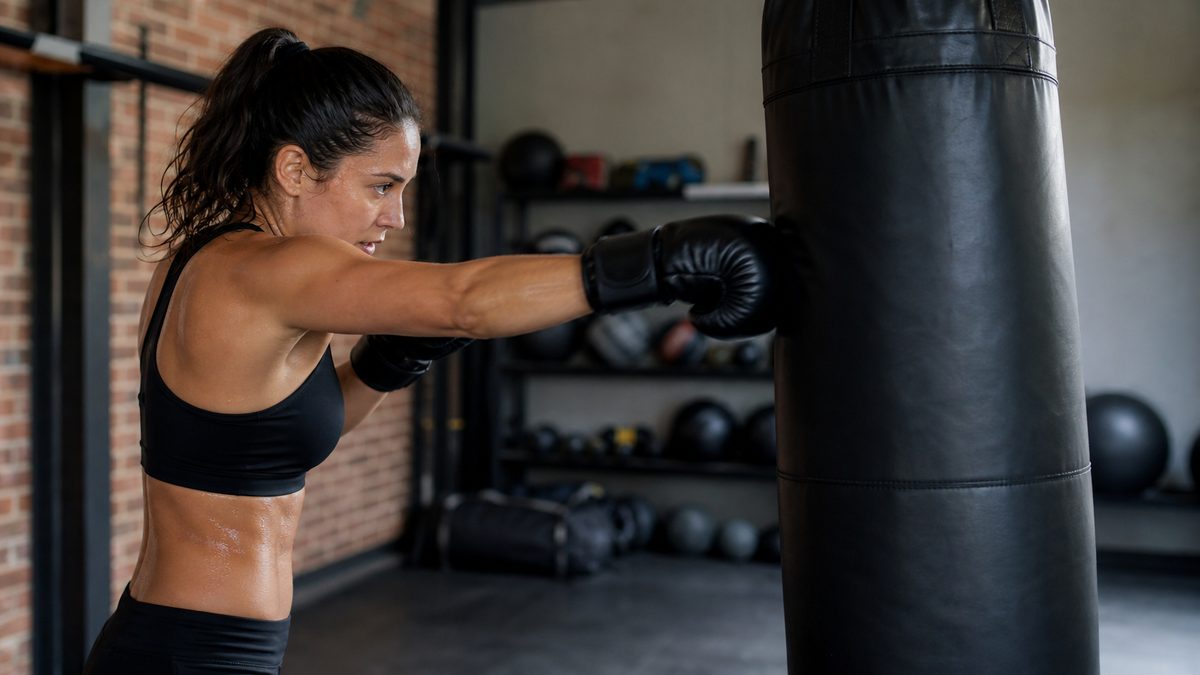
Pad work involves punching targets held by a coach or trained partner. Bag work means striking a fixed or hanging bag. Both add impact, so they call for suitable gloves, hand wraps and sound technique.
Repeated punches involve the shoulders, arms and trunk. Your legs keep you stable and move your body around the training area. Timed rounds also ask you to sustain effort while thinking about position and rhythm. This mix makes boxing useful as a full-body workout. Boxing delivers results with minimal space, making it ideal for training at home.
Fitness training does not make someone ready for a boxing match or a self-defense situation. Those goals require different practice, close supervision and experience under pressure. For your first month, choose solo shadowboxing, a beginner fitness class or coached pad and bag sessions that exclude sparring.
What should you learn before throwing fast punches?
Learn stance, guard and footwork before speed. These skills give every punch a stable base and leave you ready to move again.
Stand in a comfortable staggered position, with one foot slightly ahead of the other. Keep your feet far enough apart to feel steady, but do not force a wide stance. Soften your knees and spread your weight across both legs. Your shoulders should feel loose rather than lifted or tense.
Bring your hands near your face and lower your chin a little. This is your guard. Keep your elbows close enough that your arms feel organised. Avoid squeezing your fists while waiting to punch. Extra tension makes movement stiff and tires your arms sooner.
Your preferred writing hand does not have to decide your stance on day one. Try each side. Choose the position that lets you step, stop and punch with the most control. A coach may later help you refine that choice.
Move with short steps. When moving forward, let the front foot start and allow the rear foot to follow. When moving back, start with the rear foot. To move sideways, lead with the foot nearest that direction. Keep the same general space between your feet.
Do not cross your feet or click them together. Both errors narrow your base and make the next action harder to control. After each step, check whether you could stop at once without stumbling. If you cannot, shorten the step and slow down.
Practise movement without punches at first. Move forward and back while holding your guard. Then work from side to side. Reset after every step. Balance is the test that matters, not how much ground you cover.
How do you learn the basic punches without losing control?
Start with the jab and cross. Add the hook and uppercut after you can throw straight punches while staying balanced. Power is not the first goal. A clean punch should end with your body under control and your hand back at guard.
Jab
The jab comes from the lead hand, which is the hand above your front foot. Send it straight towards an imaginary target. Keep the shoulder relaxed and avoid locking the elbow. Bring the hand back on a direct path as soon as the punch ends.
Your rear hand stays at your face while the jab moves. Watch for a common error: reaching so far that your head moves past your front knee. Use a smaller motion if you cannot return to your stance at once.
Cross
The cross comes from the rear hand. Turn your rear hip and shoulder towards the target as the hand travels straight ahead. Allow the rear heel to turn naturally with the body. Keep your lead hand at guard.
The rotation should support the punch without pulling you off balance. Finish with the wrist straight, then reverse the movement and return the hand to your face. If the punch spins you away from your stance, use less force.
Hook
The hook travels on a curved path from the side. Keep the elbow bent and turn through the body rather than swinging the arm on its own. Use a compact range while learning. A wide swing takes longer to recover and can place the shoulder in a poor position.
Your wrist should stay neutral, with the hand lined up with the forearm. Practise the lead hook slowly and stop before any joint feels strained.
Uppercut
The uppercut travels upward from a close position. Bend the knees slightly and turn the body as the fist rises. Do not drop the hand low before punching or lean back to create force. Keep the motion short and controlled.
Use a mirror or record a brief practice round if that helps you check your form. Look for the same signs after every punch: your feet remain set, the other hand stays near your face and the punching hand returns to guard. Once single punches meet those checks, practise a jab followed by a cross. Add another punch only when your posture stays steady.
Stop if you feel pain in your hand, wrist, elbow or shoulder. Do not try to punch through it. Written cues also cannot show every error, so coached feedback is useful before you add hard bag work.
Which boxing equipment do you actually need?
Your training format decides what you need. Buying a bag or gloves before choosing how you will train can add cost without helping your technique.
For shadowboxing
- Comfortable training clothes that let your shoulders and hips move freely
- Supportive footwear suited to the floor
- Water
- A timer for work and rest periods
You do not need gloves for shadowboxing. Bare hands can also make it easier to notice whether you are clenching too hard. Train on a clear, level surface with enough room to step in every direction.
For coached pad work
- Hand wraps
- Boxing gloves that fit your hands and suit the session
- Pads held by someone who knows how to use them
Ask the coach how to wrap your hands and which gloves suit the activity. If a gym supplies equipment, check that it fits, closes securely and is in sound condition.
For heavy-bag training
- Hand wraps and suitable boxing gloves
- Access to a secure bag
- Enough clear space around the bag
A home bag must be installed for its mounting type and surrounding structure. Do not assume a hook, beam or wall can take the load. Follow the mounting instructions or have the structure checked by a suitable professional.
Start with shadowboxing or an introductory gym session. Buy gloves and wraps once you know that pads or a bag will form part of your regular training.
Which three drills should a beginner practise first?
Use focused drills before free-flowing rounds. Each drill adds one new demand while keeping balance and the return to guard as your main checks.
- Stance-and-step shadowboxing. Set your stance and guard, then take one short step forward. Reset before stepping back. Repeat the same process from side to side. Keep the feet from crossing or meeting. Make it easier by pausing after every step. Make it harder by changing direction after each clean reset. The drill is successful when you can stop without a shuffle or stumble.
- Jab-cross with a guard reset. Stand still and throw one relaxed jab. Return it fully to guard. Throw one controlled cross and reset again. When both punches feel steady, link them as a jab-cross. Keep the non-punching hand near your face. Make it easier by separating the punches. Make it harder by adding a small step before the combination. The drill is successful when both hands return to guard and your weight remains under control.
- Move-punch-move. Take a short step, settle your stance and throw a jab-cross. Return both hands to guard, then move away at an angle. Begin at a pace that lets each part remain distinct. Make it easier by using only a jab. Make it harder by changing the exit direction or adding a compact hook. The drill is successful when the combination does not trap your feet or delay your next step.
Use short rounds and rest between them. Slow down when your feet become untidy, your punches start to loop or your hands fail to return to your face. Shadowboxing intensity can change through pace, round length, rest time or movement complexity. Change one of those features at a time.
What should your first non-contact boxing workout include?
A useful first session moves from general movement to skill practice, then finishes before fatigue takes control of your technique. Use the talk test to judge effort. During the main rounds, you should feel that you are working while still being able to speak a short sentence.
- Warm up for five minutes. Walk around the space and move your arms through a comfortable range. Add gentle body turns and easy boxing steps. Raise the pace bit by bit rather than starting with fast punches.
- Rehearse technique for four minutes. Spend two minutes on stance and stepping. Use the next two minutes for slow single jabs and crosses. Pause whenever you need to correct your guard or foot position.
- Complete four shadowboxing rounds. Work for one minute and rest for one minute. Use stance-and-step work in the first round. Use controlled jab-cross practice in the second. Use the move-punch-move drill in the remaining rounds. Keep every punch light enough to stop cleanly.
- Add optional bag work. If you have suitable gloves, wraps and coaching, replace one shadowboxing round with a controlled bag round. Aim for clean contact rather than force. Skip this step if you have not learned safe hand wrapping and striking technique.
- Add a brief strength block. Use simple movements you already know and can perform with control. Keep this part brief so it supports the boxing practice rather than turning tired punches into poor ones.
- Cool down. Walk until your breathing settles. Gently move your shoulders, hands and hips through a comfortable range. Note any pain or unusual symptom rather than dismissing it as normal effort.
The whole workout can stay non-contact by using shadowboxing in every round. Stop if you feel pain, chest discomfort, faintness or another unusual symptom. Seek appropriate professional guidance if you have an injury, a health concern or doubt about whether this type of exercise suits you.
For your next session, change one variable only: add time to one round, shorten one rest or raise the pace slightly. Record what you changed, and keep it only if your balance and guard stay clean.