You do not need to overcome gym anxiety before you exercise. Start with a short, planned workout in the least intimidating setting available. Repeat the same simple routine until it feels familiar. Then change one small part at a time.
This approach does not demand confidence on day one. It gives you a clear task, a stopping point and a way to measure success. Your first goal is to complete the plan you chose. You do not need to explore the whole gym, use every machine or prove how hard you can train.
Does feeling anxious mean you do not belong at the gym?
No. Gym anxiety is a feeling, not proof that you are unwelcome or incapable.
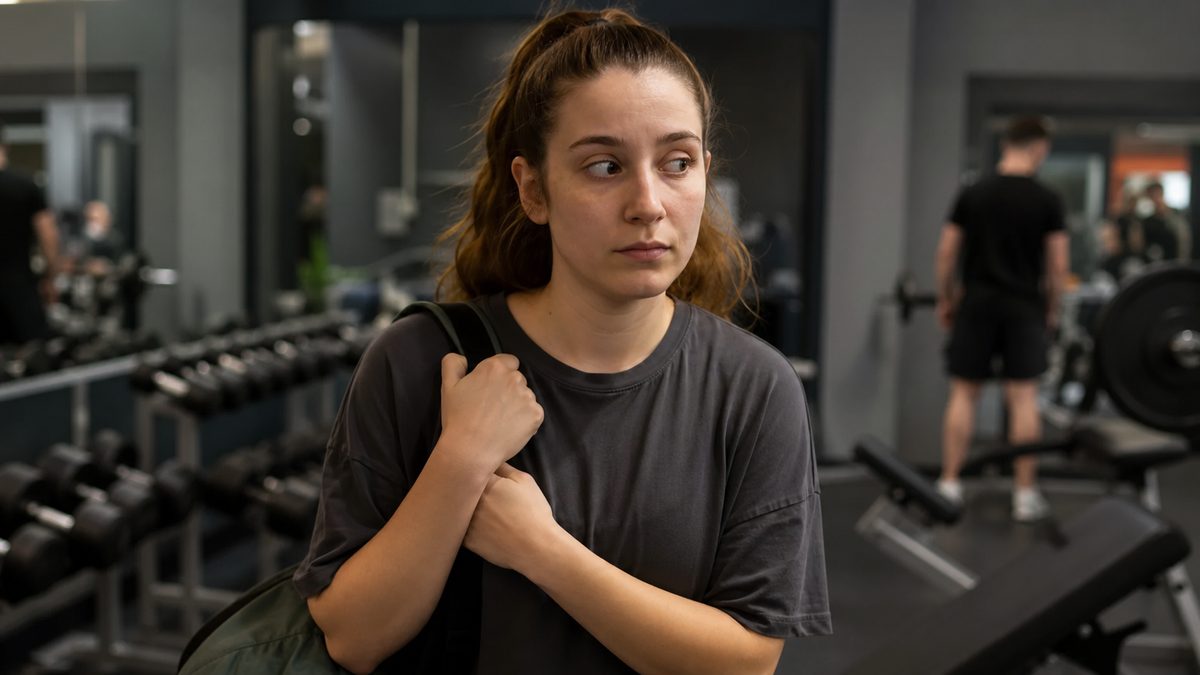
You may worry about your clothes, body, fitness or lack of experience. You may feel unsure about where to go or how a machine works. Even walking through the entrance can feel exposed when the space is unfamiliar.
Anxiety can also make ordinary moments seem loaded with meaning. Someone may look in your direction, and your first thought might be, They think I am doing this wrong. The observable fact is much smaller: a person looked in your direction. You cannot know what that person thought from the glance alone.
This does not mean you must argue with every anxious thought. Name the thought, separate it from what you can observe and return to your next planned action.
Your concern may sound like one of these:
- I do not know where anything is.
- I am worried that I will use the equipment incorrectly.
- I feel self-conscious about my body or clothing.
- I think people will notice how unfit or inexperienced I am.
- I dislike busy rooms and waiting near other people.
A specific worry gives you something practical to change. If you fear getting lost, ask for a tour. If equipment feels confusing, request a demonstration. If crowds make the visit harder, choose a quieter time. Telling yourself to be confident gives you no such next step.
What should you decide before your first visit?
Plan the visit from arrival to exit before you leave home. This reduces the choices you must make while you already feel tense.
Write the plan as a short note on your phone. Include:
- The time you will arrive.
- What you will wear.
- Where you will put your belongings.
- How you will warm up.
- Which familiar exercises you will do.
- When the workout will end.
- Where you can pause if you feel overwhelmed.
A useful first plan could be: enter, put your bag away, walk at an easy pace, complete two familiar movements, cool down and leave. Adjust every part to suit your health, ability and experience. The purpose is to create a sequence you can follow, not to meet a universal fitness target.
Knowing when to stop matters as much as knowing where to start. Without an endpoint, a short visit can feel like an open test. A planned finish turns it into a defined task.
You can also remove uncertainty before the workout. Check how entry works. Look at the facility map if one is available. Ask staff where the change rooms, drinking water and equipment you need are located. If you do not know how to adjust a machine, ask for a demonstration rather than trying to copy another member.
Keep the plan on one phone screen. A long program creates more choices and more chances to wonder whether you are doing enough. Your first workout only needs to be clear, manageable and easy to repeat.
How can you begin without making the first workout a test?
Choose the easiest useful version of exercise you can complete, then repeat it before adding more.
If entering a gym feels like too large a first step, begin by rehearsing part of the experience. Put on your training clothes and take a walk. Try familiar movements at home. Visit the gym to ask a question or see the layout without expecting yourself to complete a full workout.
A gradual plan can follow this pattern:
- Rehearse. Prepare your clothes, practise the movements you plan to use and learn where you need to go.
- Complete a short visit. Follow a limited routine with a clear stopping point.
- Repeat before expanding. Use the same area and exercise order so fewer parts of the visit feel new.
Suppose, as a hypothetical example, a beginner feels unsure around strength machines. Their first visit could stay within a familiar cardio area. On the next visit, they could repeat that routine and ask a staff member to explain one machine. A later workout might include that machine while the rest of the plan remains unchanged.
This method separates practice from performance. You learn the entrance, room layout and flow of the session while keeping the workout simple. Each repeated visit gives you direct evidence that you can arrive, complete a chosen action and leave.
When you are ready to progress, change one element. You might spend a little longer exercising, add one familiar movement or adjust the resistance. Changing several parts together makes it harder to tell what feels manageable.
Do not measure the first session by sweat, weight lifted or time spent inside. Measure it against the plan. If the plan was to enter, walk and learn where one piece of equipment is, doing those things counts as completing the session.
What can you do when anxiety rises during the workout?
Pause and orient your attention to what is happening around you. One simple prompt is to identify three things you can see, three sounds you can hear and three parts of your body you can move.
This is a grounding prompt, not a workout program or a cure for anxiety. It gives you a concrete task when thoughts about being watched start to take over.
You might use it beside a treadmill, on a bench away from moving equipment or in another quiet place. Notice three visible objects. Listen for three separate sounds. Then move three body parts in a comfortable way, such as opening your hands, turning your head or moving your feet.
After that pause, make a practical choice:
- Continue with the next planned exercise.
- Use an easier version of the workout.
- Rest in a quiet place.
- End the session and leave.
Leaving is not proof that you failed. You still entered the setting and learned something about what made the visit difficult. Use that information to adjust the next plan. You might choose a quieter time, shorten the routine or ask someone to show you the space.
Save the grounding prompt below your workout note before you arrive. Also find a safe place to pause when you first enter. Searching for both while distressed adds another decision at the hardest moment.
How can you make the gym feel more manageable?
Change the parts of the visit that create needless friction. Comfort is a practical setup choice, not something you must earn.
Match each adjustment to the concern:
- Busy rooms: ask staff when the gym is usually quieter and try one of those times.
- Confusing equipment: request a demonstration before adding the equipment to your routine.
- Getting lost: take a brief facility tour and identify the areas you plan to use.
- Feeling exposed: begin in a quieter area where you can follow your note without rushing.
- Uncomfortable clothing: wear clothes that fit securely and let you move without constant adjustment.
- Distracting noise: use headphones where doing so is safe and permitted.
You can also attend with a trusted person. Agree on the plan before you arrive. They can help you find the right area or remember the next step, but they do not need to push you through a harder workout.
A personal trainer can offer a brief orientation, explain equipment and help turn broad goals into a simple routine. Ask what the first session will involve before booking. You can say that unfamiliar equipment or crowded spaces make you uneasy and that you want a clear, repeatable starting plan.
Good support should make the next action clearer. It should also help you build enough familiarity to make more choices for yourself over time. You do not need constant reassurance or a perfect companion before you can exercise.
Avoid using every comfort measure at once. Pick one change to the setting and one source of support. For example, choose a quiet time and ask staff to demonstrate one machine. That gives you a focused test of what helps.
When should you seek help beyond a workout plan?
Speak with a qualified health professional when anxiety is intense, keeps causing you to avoid activities or affects other parts of daily life. A psychologist or another qualified mental health professional can assess what you are experiencing. An article or gym plan cannot diagnose it.
Take physical symptoms seriously as well. Exercise can involve changes in breathing and heart rate, while anxiety can also feel physical. You should not assume that every symptom during a workout comes from anxiety. Pause and seek medical advice for new, severe or unexplained symptoms. Seek urgent help if you think you may be having a medical emergency.
This boundary matters because pushing through is not always the right goal. A shorter workout can address a difficult day. Persistent distress or concerning physical symptoms need suitable professional attention, not a tougher fitness challenge.
You can still prepare useful information before asking for help. Note what you felt, when it began, what you were doing and whether it also occurs outside the gym. Describe the facts without trying to diagnose the cause yourself.
For your next session, choose the time, save one short routine on your phone and define success as completing that planned step.